Vacuum Oven Price: What Should It Cost and What Are You Really Paying For?
If the main goal is to understand vacuum oven price quickly—without reading a textbook—this guide does that. I work with vacuum drying oven configurations every day, and the job here is simple: help match a real application (lab samples, heat-sensitive powders, solvents, electronics, or scale-up production) to the right oven size and safety level, so money isn’t wasted on the wrong specs.

What makes vacuum oven price go up (or stay reasonable)?
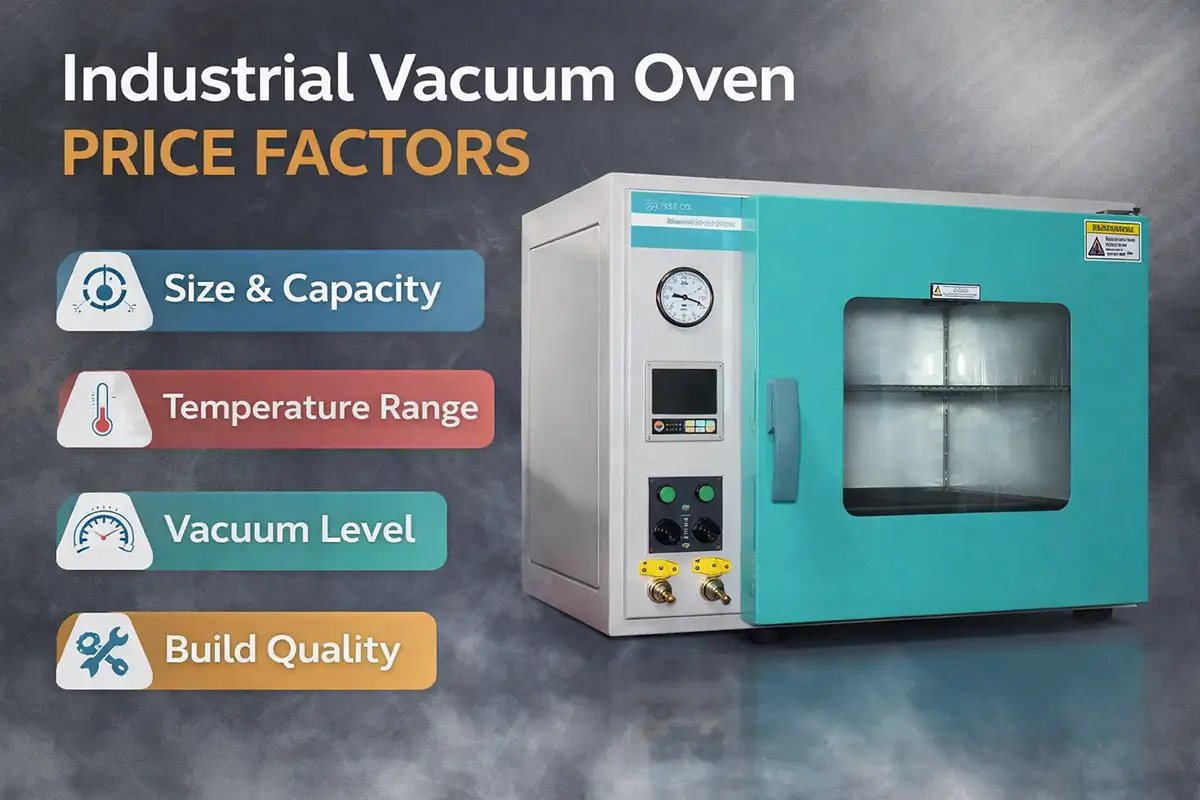
Most buyers want one answer: “What’s the price?” In practice, vacuum oven price is determined by a few measurable factors. If these are clear, it becomes easy to request a quote that matches the job.
Chamber size (liters): bigger chambers cost more because the steel volume, insulation, door structure, and heating system all scale up.
Vacuum performance: deeper vacuum (and stable control) usually needs better seals, fittings, valves, gauges, and sometimes higher-end pumps.
Temperature range & stability: high-temperature operation requires more robust heaters, controllers, and safety design.
Materials: 304 stainless steel liners are standard for corrosion resistance and easy cleaning—common in lab and light industrial setups.
Safety options (explosion-proof): if solvents or flammable vapors are involved, the design and components change significantly.
Usability features: timers, shelves, and digital controls may look “small,” but they affect productivity every day.
A practical baseline (from the provided specs)
In the DZF series listed below, the maximum vacuum degree is 0.098 MPa, the temperature range is RT+10 to 200°C, and the working environment is +5 to +40°C. That consistency means pricing differences are driven mainly by capacity, power, shelves, and optional safety configuration.
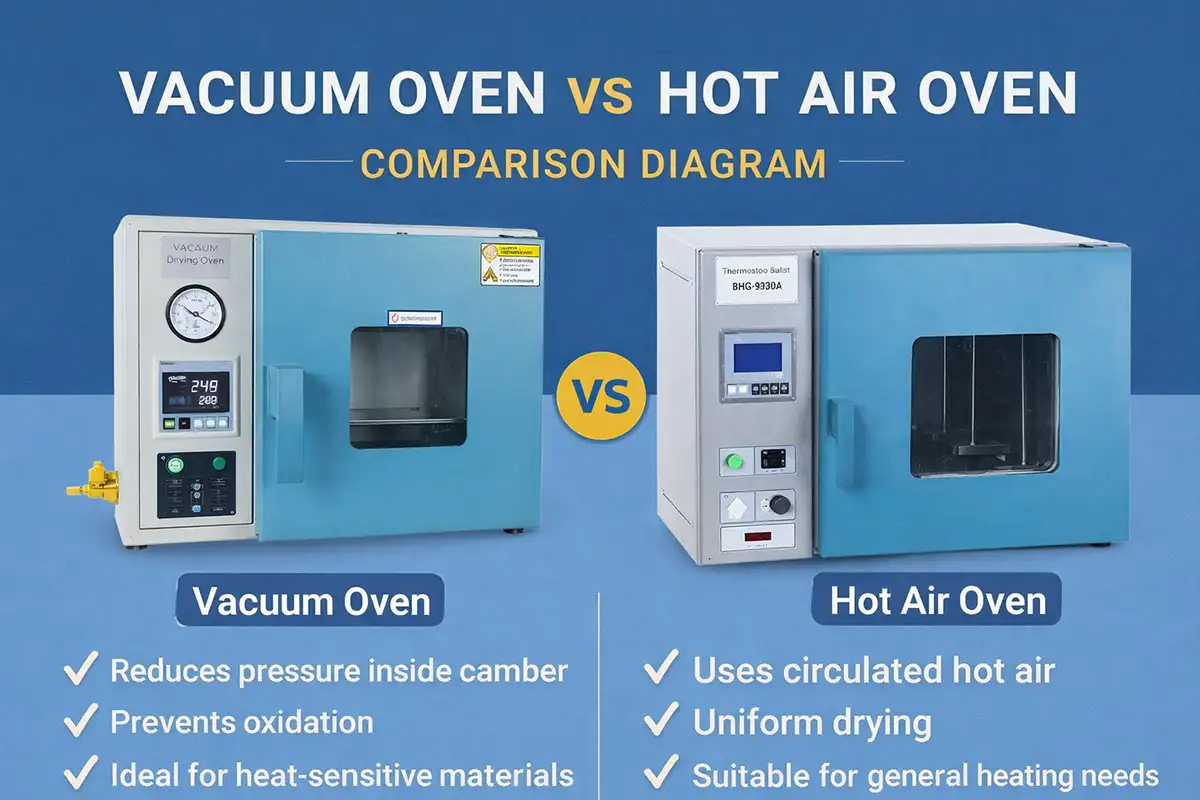
Does a vacuum oven always save time and protect materials?
Question: Is vacuum drying always “better” than normal hot-air drying?
From the author’s perspective: often yes—especially for heat-sensitive samples or solvent-containing materials. Under vacuum, liquids can boil at lower temperatures, so drying can be gentler and reduce oxidation risk. But if the material is not heat-sensitive and speed is not critical, a standard drying oven may be more cost-effective.
That is why the “right” vacuum oven price is not the lowest number—it is the cost that meets the process requirement without over-buying capacity or safety features.
DZF vacuum oven models (easy comparison)
Mobile tip: the table can scroll horizontally.
| Model | Capacity (L) | Temp Range (°C) | Max Vacuum (MPa) | Power (W) | Shelves | Liner | Timer (min) | Optional |
|---|---|---|---|---|---|---|---|---|
| DZF-6010 | 8 | RT+10 ~ 200 | 0.098 | 400 | 1 | 304 Stainless Steel | 1 ~ 9999 | Explosion-proof |
| DZF-6020 | 25 | RT+10 ~ 200 | 0.098 | 800 | 1 | 304 Stainless Steel | 1 ~ 9999 | Explosion-proof |
| DZF-6050 | 55 | RT+10 ~ 200 | 0.098 | 1400 | 2 | 304 Stainless Steel | 1 ~ 9999 | Explosion-proof |
| DZF-6090 | 91 | RT+10 ~ 200 | 0.098 | 2400 | 2 | 304 Stainless Steel | 1 ~ 9999 | Explosion-proof |
| DZF-6210 | 215 | RT+10 ~ 200 | 0.098 | 2060 | 3 | 304 Stainless Steel | 1 ~ 9999 | Explosion-proof |
| DZF-6500 | 430 | RT+10 ~ 200 | 0.098 | 2800 | 4 | 304 Stainless Steel | 1 ~ 9999 | Explosion-proof |
Want to explore specific categories quickly? Here are relevant internal pages:benchtop vacuum oven,explosion-proof vacuum oven,large vacuum oven.
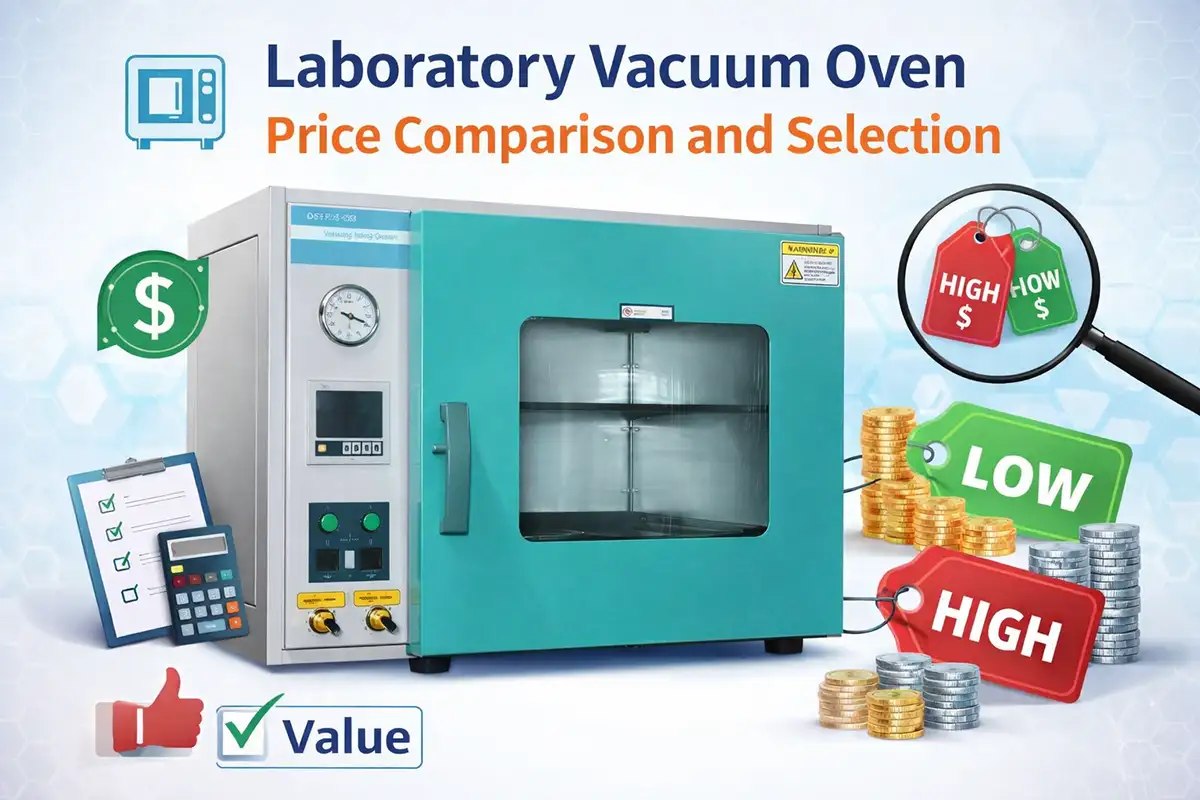
What vacuum oven price range should be expected—without guessing?
Question: Is it possible to estimate vacuum oven price just from liters?
From the author’s perspective: capacity is a strong predictor, but it is not enough by itself. A small benchtop unit can become “premium-priced” if it needs tight vacuum stability, special feedthroughs, or an explosion-proof configuration. Conversely, a larger chamber can be competitively priced if the configuration is standard.
A more accurate way to estimate cost is to confirm four inputs before requesting a quote:
What is being dried (powder, solvent-containing sample, electronics, resin, etc.)?
Batch size (how many trays or how many kilograms per run)?
Process temperature (maximum and typical setpoint)?
Safety needs (flammable solvents = consider explosion-proof)?
One authoritative data point: why vacuum matters for drying
Vacuum drying works because boiling points decrease as pressure decreases. The U.S. National Institute of Standards and Technology (NIST) provides reference data and formulations relating temperature, pressure, and water properties, widely used in engineering calculations. In practical terms: lower pressure can enable drying at lower temperatures, which is valuable for heat-sensitive materials. (Reference: NIST Chemistry WebBook and NIST thermophysical property resources.)
Quick FAQ (answers buyers actually need)
Need an accurate vacuum oven price for a real process?
Share target temperature, material type, batch size, and whether solvents are involved. A matching DZF configuration can be recommended quickly.